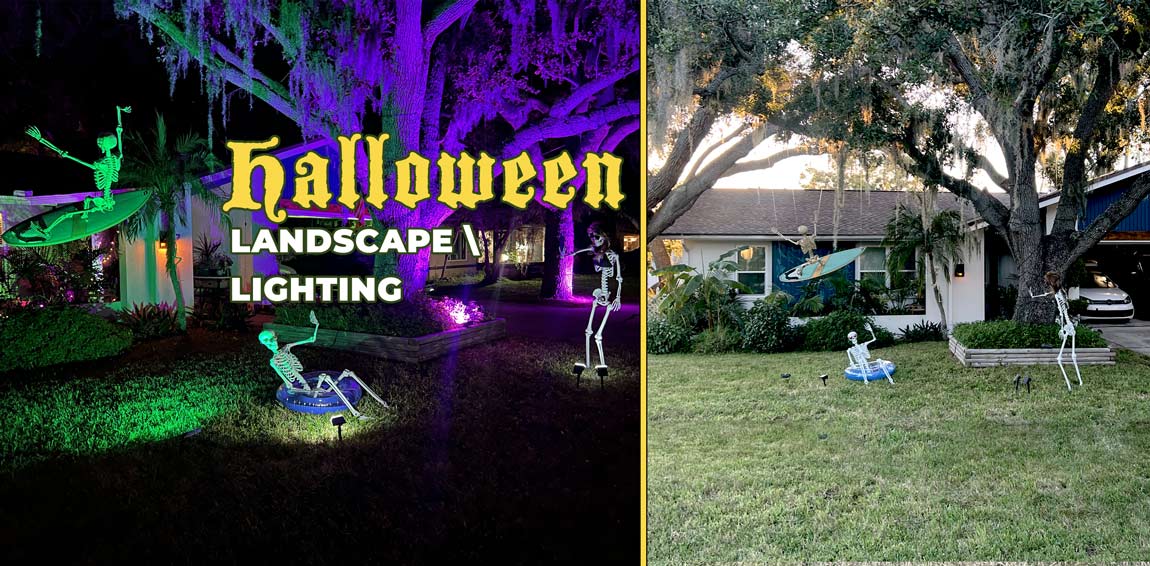
Halloween Lighting and Your Landscape: Safe Installation Tips for Florida Properties
Halloween has evolved far beyond simple jack-o-lanterns on the porch. Today’s outdoor Halloween displays rival professional productions, with elaborate lighting schemes that transform properties into haunted spectacles. From towering skeletons climbing facades to eerie lighting effects that make trees come alive with supernatural presence, creative homeowners and property managers across Pinellas County are pushing the boundaries of seasonal decorating.
However, the impressive displays you see in your neighborhood require more than just creativity and enthusiasm. Professional-grade Halloween lighting demands careful planning, proper installation techniques, and respect for your landscape’s existing features. One misplaced stake can damage an irrigation line. Poorly secured lights can harm tree bark. Heavy decorations anchored incorrectly can compact soil or stress root systems.
At Lawns and Palms FL, we’ve spent nearly two decades maintaining commercial and residential properties throughout Pinellas County. We’ve seen spectacular Halloween displays installed correctly, and we’ve repaired the damage from installations gone wrong. In this guide, we’ll share professional insights on creating stunning Halloween lighting effects while protecting the landscape investment you’ve worked hard to establish.
Understanding Your Landscape Before You Decorate
Before purchasing a single string of lights or hammering the first stake, take time to understand your property’s landscape infrastructure. This knowledge prevents costly damage and ensures your decorations enhance rather than harm your outdoor investment.
- Mapping Your Irrigation System: If your property has an irrigation system, locate the zones, spray heads, and underground lines before placing any stakes or anchors. In Florida’s sandy soil, it’s easy to pierce irrigation lines with decoration stakes. Take photos of your irrigation layout or request documentation from your landscaping company. Mark spray head locations with temporary flags before beginning installation.
- Identifying Tree Health and Structure: Not all trees can safely support Halloween lighting and decorations. Assess tree health before adding stress from mounted decorations or wrapped lighting. Look for signs of disease, dead branches, or structural weakness. Mature oak trees common in Pinellas County can typically handle properly installed lighting, while younger palms and ornamental trees require gentler approaches.
- Understanding Root Zones: Tree roots extend far beyond the visible trunk, often reaching out as far as the canopy spreads. Heavy foot traffic, staking, or placing large decorations within this zone can compact soil and damage feeder roots. Plan decoration placement that minimizes impact on these critical areas.
- Evaluating Electrical Access: Survey available outdoor outlets and their capacity. Calculate the electrical load your display will require. For commercial properties or extensive displays, consider having a licensed electrician assess your outdoor electrical infrastructure before installation.
This preliminary assessment takes perhaps an hour but prevents problems that could require professional landscape repair costing hundreds or thousands of dollars.
Lighting Your Skeleton Crew: Powered LED vs. Solar Options
The skeleton has become the iconic centerpiece of modern Halloween displays. From 12-foot giants to entire skeleton families, these decorations demand proper lighting to achieve maximum impact. Choosing between powered LED systems and solar lighting depends on several factors specific to your property and display goals.
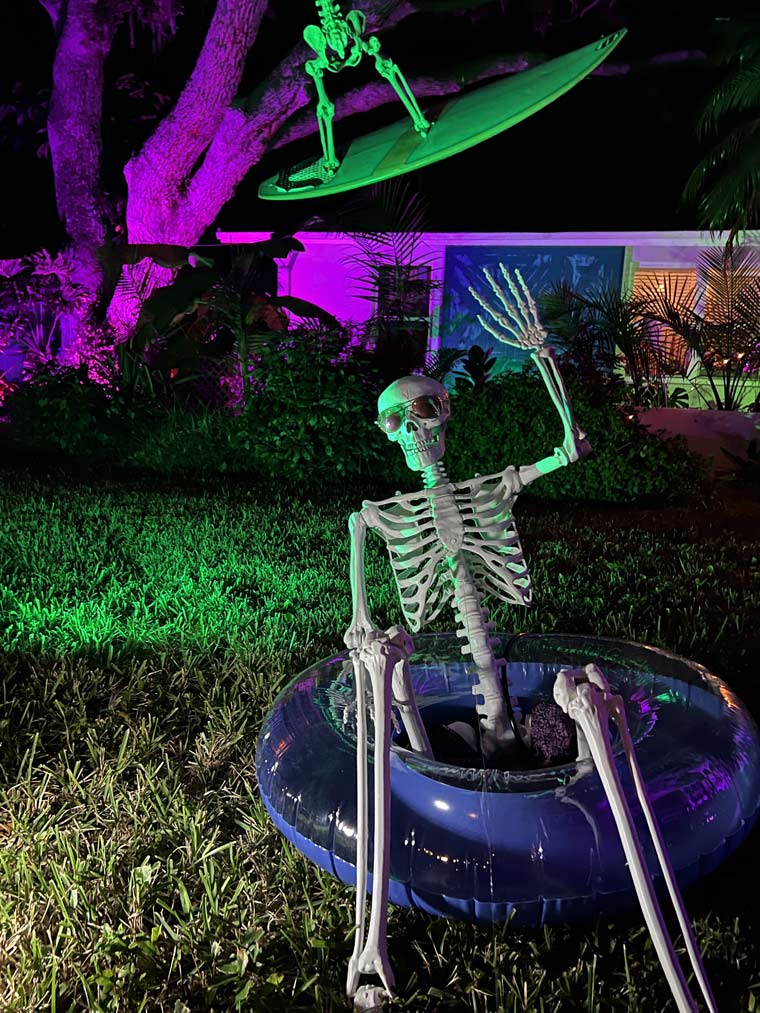
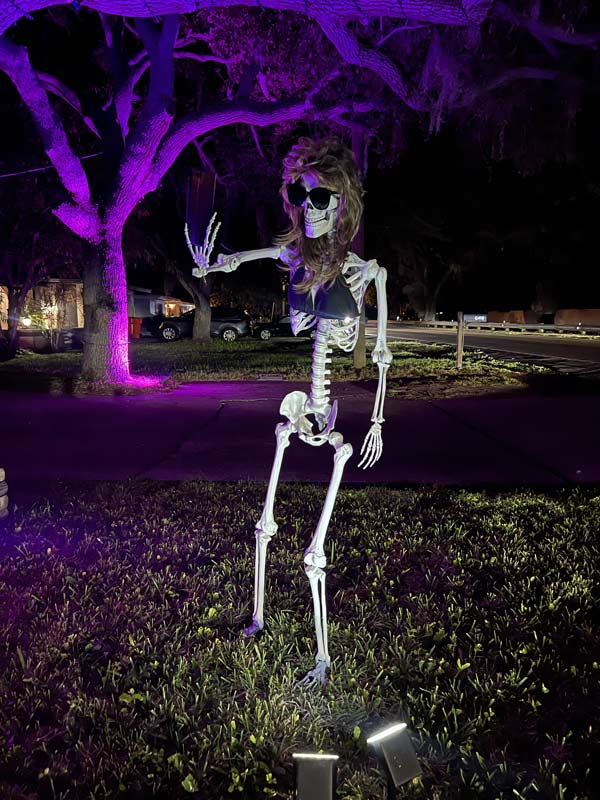
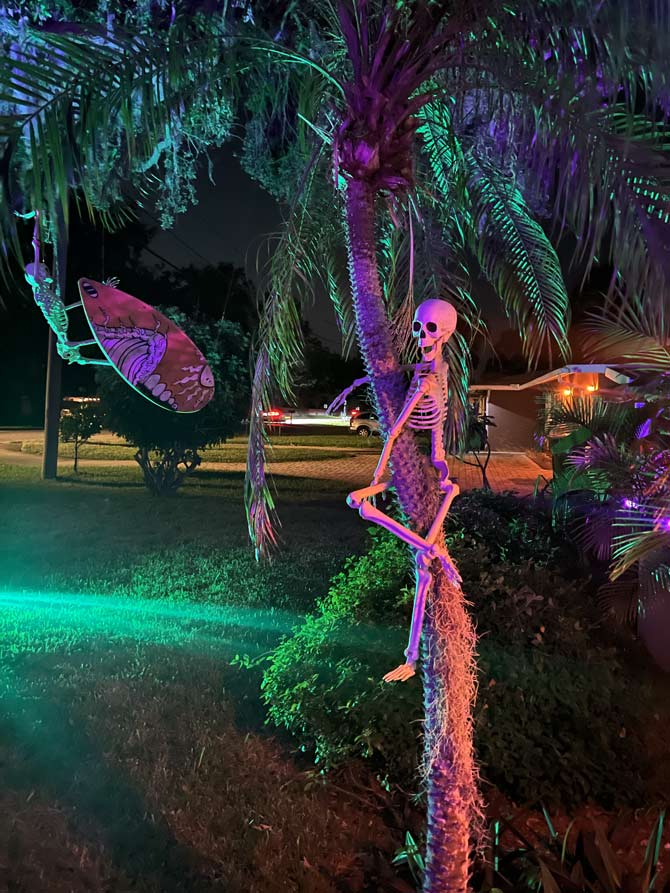
Powered LED Lights: Maximum Impact and Control
For skeletons positioned near buildings or where electrical access is available, powered LED systems deliver superior performance and reliability. Modern LED technology has revolutionized outdoor lighting with energy efficiency, durability, and spectacular color options.
LED spotlights positioned at ground level create dramatic uplighting that emphasizes skeleton height and detail. A 10-watt LED spotlight provides ample illumination for a 12-foot skeleton while consuming minimal electricity—running continuously through October would cost less than five dollars. For multiple skeletons, consider RGB LED lights that allow color changes, creating different moods throughout the month.
Installation considerations for powered LED skeleton lighting:
- Positioning: Place spotlights 3-5 feet from the skeleton’s base, angled upward at approximately 45 degrees. This angle maximizes dramatic shadows while providing even illumination across the figure.
- Weatherproofing: Use outdoor-rated LED fixtures with appropriate IP ratings (IP65 or higher for Florida’s weather conditions). Ensure all connections use weatherproof junction boxes or outdoor-rated extension cords.
- Cable Management: Secure cables along existing landscape features when possible. Use landscape staples designed for irrigation lines—these avoid the sharp edges that can cut through wire insulation. Never run cables where mowers or trimmers will contact them.
- Protection from Landscape Equipment: Mark cable runs with small flags during installation so landscape maintenance teams can work around them. If you use professional landscaping services, inform your provider about decoration locations and lighting installations.
For skeleton displays along walkways or in high-visibility areas where multiple viewing angles matter, consider using two or three LED spots positioned around the skeleton for 360-degree illumination without harsh shadows.
Solar-Powered Lighting: Flexibility and Sustainability
Solar technology has advanced dramatically in recent years, making solar spotlights a viable option for skeleton lighting, particularly in locations where running electrical lines proves challenging. Florida’s abundant sunshine makes solar lighting especially practical for our region.
Quality solar spotlights now deliver 200-400 lumens—sufficient for effective skeleton illumination in areas without competing light sources. The key word is “quality.” Budget solar lights often disappoint with dim output and short battery life. Investment in reputable brands pays dividends in performance and longevity.
Premium solar skeleton lighting considerations:
- Solar Panel Placement: Position solar panels where they receive six or more hours of direct sunlight daily. In Pinellas County, south-facing placement typically provides optimal charging. Avoid locations shaded by trees, buildings, or overhanging structures during peak sun hours (10 AM to 4 PM).
- Separation Distance: Modern solar spotlights offer separated solar panels connected by 10-15 foot cables. This allows flexible placement—solar panel in a sunny lawn area, spotlight illuminating a skeleton in a shadier location near the house.
- Battery Capacity: Look for solar lights with lithium-ion batteries rated for 8-10 hour operation. This ensures your display remains illuminated throughout the evening, not just the first few hours after dusk.
- Ground Installation: Solar lights typically include stakes for ground installation. In Florida’s sandy soil, these stakes can be unstable during wind or rain. Enhance stability by positioning stakes near existing landscape features like shrubs or ornamental grasses that provide wind protection. For particularly exposed locations, consider supplementing with landscape fabric staples or small tent stakes for additional security.
- Maintenance During Display: Clean solar panels weekly during October. Florida’s humidity, morning dew, and airborne debris reduce charging efficiency. A simple wipe with a damp cloth maintains optimal performance.
- Hybrid Approach: Many successful displays combine powered LED and solar lighting strategically. Use powered LEDs for primary skeleton features near the house where dramatic impact matters most, and solar lights for secondary decorations, pathway marking, or perimeter skeletons where electrical access is limited.
The choice between powered and solar ultimately depends on your property layout, electrical access, budget, and desired lighting intensity. Both technologies, properly implemented, create spectacular skeleton displays while respecting your landscape.
Illuminating Large Trees: Creating Dramatic Halloween Ambiance
Few Halloween lighting effects rival the impact of properly illuminated large trees. A mature oak or sprawling ficus transformed with strategic LED lighting becomes a focal point that elevates an entire display from neighborhood decoration to memorable spectacle. However, tree lighting requires techniques that protect tree health while creating stunning visual effects.
Choosing Appropriate LED Systems for Trees
Tree lighting demands different considerations than skeleton or structure lighting. The scale is larger, the installation more complex, and the potential for plant damage greater if done incorrectly.
For large trees (30+ feet), commercial-grade LED string lights or LED spotlights provide the most dramatic results. The choice depends on the effect you want to create:
LED String Lights for Wrapped Effects: Professional-grade LED string lights (also called fairy lights or icicle lights) create enchanting effects when wrapped around trunks and major branches. For Halloween, purple, orange, or color-changing RGB LEDs offer thematic impact. Choose lights specifically rated for outdoor use with sufficient wire gauge for your run length.
When wrapping trees with string lights:
- Wrap loosely to avoid restricting bark expansion and sap flow. Trees continue growing even through fall and winter in Florida’s climate. Tight wrapping damages cambium (the layer just beneath bark) and can girdle branches over time.
- Use soft attachment methods. Avoid nails, staples, or anything that penetrates bark. Small plastic clips designed for landscape lighting work well for securing lights without damage. Alternatively, use soft fabric ties that won’t cut into bark as branches move in wind.
- Limit wrapping to structural branches. Avoid wrapping around small twigs and new growth. Focus on the trunk and primary branches visible from viewing angles.
- Follow natural branch patterns. Work with the tree’s structure rather than forcing unnatural configurations. This creates more organic-looking displays and reduces stress on branches.
- Plan removal carefully. Before installation, consider how you’ll remove lights without damaging bark or breaking branches. Install with removal in mind—some displays are easier to take down than others.
LED Spotlights for Uplighting Trees: For creating dramatic silhouettes or washing large trees with colored light, ground-mounted LED spotlights offer superior control and visual impact. This approach works particularly well for trees with interesting branch structures or distinctive canopies.
Professional uplighting techniques for Halloween tree displays:
- Positioning for Effect: Place LED spots 6-12 feet from the tree’s base, angled upward to illuminate the canopy. For smaller trees (15-25 feet), position lights closer. For massive specimens, multiple spotlights positioned around the circumference create fuller illumination.
- Color Selection: Deep purple LEDs create mysterious, supernatural ambiance. Orange provides classic Halloween warmth. Green suggests eerie, otherworldly atmosphere. RGB LED systems allow nightly color changes throughout October, keeping displays fresh and interesting.
- Wattage Considerations: Large trees require substantial light output for effective illumination. LED floodlights in the 20-50 watt range provide sufficient brightness for trees up to 40 feet. For particularly tall or dense canopies, consider multiple lower-wattage fixtures rather than a single high-wattage unit—this provides more even illumination and allows interesting color combinations.
- Hiding Equipment: Conceal spotlights among existing landscape plants, behind retaining walls, or within landscape bed areas. This maintains the magical effect by hiding the light source. The goal is illuminated tree canopy without obvious equipment.
- Protection During Landscape Maintenance: Mark spotlight locations clearly if your property receives regular landscape maintenance. Our teams work around seasonal decorations carefully, but knowing exact placement prevents accidental damage during mowing, edging, or blowing operations.
- Respecting Tree Biology: Even temporary Halloween installations must consider tree health. Never drive stakes, screws, or nails into tree bark for any reason. Each penetration creates a wound that invites pests and disease—particularly problematic in Florida’s humid climate where fungal infections spread rapidly.
Avoid placing heavy objects directly against tree trunks. Skeletons “climbing” trees should be secured to stable branches using soft rope or fabric straps, not wire or metal that cuts into bark.
Keep lighting equipment and extension cords outside the critical root zone when possible. If placement within the root zone is unavoidable, distribute weight with plywood platforms to prevent soil compaction.
For particularly valuable specimen trees, consider consulting with a certified arborist before installing elaborate lighting displays. The cost of professional advice is minimal compared to the value of mature trees.
Special Considerations for Palm Trees: Palms, ubiquitous in Pinellas County landscapes, present unique lighting opportunities and challenges. Unlike hardwood trees, palms have different structural characteristics:
Palm fronds are heavy and shed regularly. Avoid attaching lights or decorations to fronds that will drop during October. Focus on the trunk for wrapped lighting or use ground-mounted spots to illuminate the crown.
Palm bark (technically called the pseudobark or boot) is more delicate than hardwood bark. Use extra caution when attaching anything to palm trunks. Consider uplighting rather than wrapped installations for valuable palm specimens.
Certain palm species, like sabal palms (Florida’s state tree), develop interesting textures and patterns that dramatically enhance when properly lit. A simple uplight creates sculptural effects highlighting the palm’s natural beauty.
Safe Installation Around Irrigation Systems
Irrigation system damage represents one of the most common landscape casualties of holiday decorating. A single punctured line can waste hundreds of gallons of water and require professional repair. Understanding how to work around these systems protects both your water infrastructure and your water bill.
Locating Irrigation Components: Before placing any stakes, identify irrigation zones and components. Most systems include underground PVC pipes running 6-12 inches below the surface, spray heads or rotors at various locations, and control valves often located near buildings or in utility boxes.
If you use professional landscape services, ask for irrigation layout information. We provide irrigation maps to clients upon request, marking line locations, head positions, and valve boxes. This documentation proves invaluable when planning decoration placement.
For DIY detection, look for visual clues: lines of spray heads indicate underground pipe runs between them. Valve boxes usually have green covers visible in planting beds or lawn areas. Areas with particularly green grass often indicate irrigation line locations where slight leaks provide extra water.
Safe Staking Techniques: When placing decoration stakes near irrigation components, follow these guidelines:
Stay at least 18 inches away from visible spray heads. Underground pipes approach heads from various directions, and lateral lines may not run in straight paths.
Hand-probe before hammering stakes. Use a long screwdriver or metal probe to check for underground obstacles before driving stakes. You’ll feel the difference between soil and PVC pipe with gentle probing.
Use shallow stakes in irrigation zones. Many decorations work fine with 6-8 inch stakes rather than deep ground anchors. Shorter stakes reduce the risk of hitting lines while providing adequate stability in Florida’s sandy soil.
Angle stakes away from known pipe runs. If you must stake near an irrigation line, angle the stake away from the pipe direction to minimize contact risk.
Weight rather than stake when possible. For many decorations, particularly those in protected areas away from strong wind exposure, weighted bases provide alternative securing methods without ground penetration. Sandbags, decorative rocks, or heavy planters work well for stabilizing decorations without stakes.
Post-Installation Irrigation Check: After installing Halloween decorations and lighting, run each irrigation zone briefly to verify normal operation. Watch for unusual spray patterns, water shooting upward from damaged pipes, or areas not receiving water. Early detection of installation damage allows immediate repair before significant water waste occurs.
If you discover irrigation damage, shut off the affected zone immediately and contact a professional irrigation repair service. Attempting DIY repairs on pressurized systems often worsens the problem. Our company provides irrigation system repairs and can typically address holiday decoration damage quickly and affordably.
Extension Cord Safety and Cable Management
Elaborate Halloween lighting displays require substantial electrical infrastructure. Extension cords snake across lawns, through planting beds, and around trees. Poor cable management creates multiple problems: tripping hazards, equipment damage during landscape maintenance, and potential electrical hazards from Florida’s frequent October rain.
Selecting Appropriate Extension Cords: Not all extension cords suit outdoor holiday use. For Halloween lighting installations:
Use only outdoor-rated cords with appropriate gauge for your load. The cord package should clearly state “outdoor use” and show a W-A designation indicating weather resistance.
Match cord gauge to distance and load. For runs under 50 feet with LED lighting (typically low amperage), 16-gauge cords suffice. For longer runs or higher-wattage equipment, 14-gauge or 12-gauge cords prevent voltage drop and heating issues.
Choose visible colors. Bright orange or yellow cords remain visible during daylight, helping you avoid tripping and alerting landscape maintenance crews to their presence. The aesthetic impact is minimal after dark when your display illuminates.
Ensure adequate weatherproofing on connections. All cord connections should use weatherproof covers or be positioned where water cannot pool. Florida’s October weather brings afternoon thunderstorms and morning dew—connections must withstand moisture exposure.
Strategic Cable Routing: Plan cable paths that minimize landscape impact and safety hazards:
Route along existing hardscape when possible. Running cords along driveway edges, sidewalk borders, or foundation walls keeps them out of lawn areas where mowers operate.
Cross lawn areas at right angles. When cords must cross grass, route them perpendicular to mowing patterns rather than parallel. This reduces the chance of mower contact and makes cords more visible to maintenance crews.
Secure cables without damage. Use landscape staples designed specifically for electrical lines or irrigation tubes. These have smooth edges that won’t cut insulation. Never use standard wire staples, nails, or anything with sharp edges that can pierce cord insulation.
Create service loops. Leave slight slack at connections rather than pulling cords taut. This prevents stress on connections from wind, thermal expansion, or ground settling.
Elevate connections where possible. Use small platforms, blocks, or hooks to keep cord connections off the ground where water pools.
Protecting Cords During Landscape Maintenance: If your property receives regular landscape maintenance during October:
Mark major cord runs with small flags. Bright flags every 10-15 feet along cord paths alert maintenance crews to cable locations.
Communicate with service providers. A quick text or note informing your landscape company about decoration installation prevents accidental damage. At Lawns and Palms, we appreciate knowing about seasonal installations so our crews can work around them carefully.
Consider temporary suspension. For cords crossing high-traffic areas or main mowing paths, temporary suspension using eye hooks or plant hangers keeps cables above ground level during the display period.
Inspect cables regularly. October weather takes a toll on electrical equipment. Check cables several times per week for insulation damage, connection issues, or displacement from original routing.
Working With Professional Landscape Services During Halloween
If your property receives regular professional landscape maintenance, coordination with your service provider ensures both spectacular decorations and continued landscape care throughout October. At Lawns and Palms, we work around holiday decorations regularly, but client communication makes our work safer and more efficient.
Communicating Decoration Plans: A brief notification before installing major Halloween displays helps landscape crews prepare:
Share installation timing. Knowing when decorations will be installed allows crews to adjust service schedules if needed. Some properties prefer landscape service immediately before decoration installation for pristine conditions.
Indicate decoration locations. Simple descriptions (“12-foot skeleton in front yard, lighting around the oak tree, inflatables near the mailbox”) help crews know what to expect.
Mark sensitive installations. If certain decorations are particularly delicate or expensive, marking them with flagging tape alerts crews to exercise extra caution in those areas.
Discuss access needs. Some elaborate displays may temporarily block access to certain landscape areas. Discussing this in advance allows schedule or approach adjustments.
Understanding Service Limitations: Professional landscape crews work carefully around decorations, but some limitations exist:
Edge trimming near decorations may be less precise. String trimmers require clearance to operate safely without damaging decorations. Areas immediately surrounding displays may receive modified maintenance during the decoration period.
Blowing debris around complex displays takes additional time. Crews must work around wires, stakes, and decorations carefully. Properties with extensive Halloween installations may see slightly longer service times.
Some equipment cannot operate near certain decorations. Large mowers may require shutting down near delicate displays, requiring hand-mowing or modified patterns in those areas.
Most professional landscape companies, including ours, happily work around seasonal decorations. Clear communication and reasonable decoration placement make this cooperation seamless.
Post-Halloween Landscape Recovery: After Halloween concludes, prompt decoration removal allows landscape service to return to normal:
Remove stakes carefully to minimize turf damage. Pull stakes straight up rather than at angles that tear surrounding grass.
Fill stake holes in high-visibility areas. Sandy Florida soil naturally fills small holes over time, but manual filling with soil or sand accelerates recovery in prominent locations.
Inspect for damage. Check irrigation heads, landscape lighting, and plant material near decoration installations for any inadvertent damage requiring repair.
Schedule follow-up service if needed. If decoration installation or removal caused notable landscape disruption, a specialized service visit can address specific recovery needs—repairing damaged sod, adjusting irrigation, or refreshing mulch in affected areas.
Conclusion
Halloween offers wonderful opportunities to showcase your property’s personality and create memorable experiences for visitors. With proper planning and installation techniques, your Halloween lighting display can be both spectacular and landscape-friendly. The key lies in understanding your property’s infrastructure, choosing appropriate equipment, and installing decorations with respect for the landscape investment you’ve established.
At Lawns and Palms FL, we’ve maintained Pinellas County properties since 2005, working through countless holiday seasons while protecting the landscapes our clients have invested in. Whether you’re managing a commercial property planning tasteful Halloween ambiance or a homeowner creating an elaborate neighborhood attraction, the principles remain the same: dramatic effects achieved through thoughtful installation that preserves landscape health and safety.
This Halloween, light up your skeletons brilliantly, transform your trees into haunted spectacles, and create displays that impress—all while protecting the landscape that enhances your property year-round. And if you discover irrigation damage, landscape stress, or need professional guidance on decoration placement for your property, we’re here to help ensure your landscape recovers quickly and remains healthy long after the Halloween decorations return to storage.
For more information about protecting your landscape during seasonal decorating or to schedule professional landscape services throughout Pinellas County, contact Lawns and Palms FL today. We’re here to keep your property looking spectacular every season of the year.