Shade Landscaping Solutions for Florida Backyards
A backyard that’s unusable from noon to five o’clock isn’t really a backyard — it’s a storage space for patio furniture nobody sits on. Shade landscaping fixes that, turning a heat-blasted yard into a space people actually want to spend time in.
Florida backyards face a specific problem that most general landscaping advice doesn’t address: the sun isn’t just bright, it’s relentless. Between intense UV exposure, high humidity, and summer heat indexes that regularly climb past 100°F, an unshaded backyard can go from pleasant to unbearable within an hour of midday sun. Good shade landscaping solves this with a mix of living shade, structural shade, and plant choices that actually thrive in filtered light instead of struggling against it.
This guide covers the full range of options — from trees that take years to mature to shade sails you can install this weekend — so you can build a shade strategy that fits your yard, your timeline, and your budget.
Why Florida Backyards Need a Deliberate Shade Strategy
In much of the country, shade is a nice-to-have. In Florida, it’s closer to a requirement. The state’s subtropical sun angle means UV exposure stays high even in the cooler months, and the combination of heat and humidity makes unshaded outdoor spaces genuinely uncomfortable — and, over time, hard on both people and plants.
Lawns and garden beds in full, unbroken sun also face more stress: faster moisture loss, higher irrigation demands, and more visible wear during the hottest stretches of summer. A well-planned shade layout doesn’t just make a yard more comfortable — it can reduce watering needs and protect turf and plantings from the most punishing hours of direct sun.
Living Shade: Choosing the Right Trees
Trees are the highest-impact, longest-lasting shade investment a yard can make — but they’re also the slowest to pay off, so species selection matters. Florida’s heat and humidity rule out a lot of trees that thrive elsewhere, while rewarding a smaller list of natives and well-adapted varieties.
Strong Choices for Florida Shade
- Live oak — dense canopy, long lifespan, classic Florida shade tree
- Southern magnolia — broad canopy plus fragrant spring blooms
- Sabal palm — filtered shade, tolerant of salt, wind, and drought
- Red maple — fast-growing with strong fall color
- Bald cypress — tolerates wet soil, good for low-lying yards
Placement Considerations
- Check overhead clearance for power lines before planting
- Call before you dig to avoid underground utilities
- Plant west and southwest of patios to block afternoon sun
- Give mature canopy spread room — don’t crowd structures
- Avoid low-lying, poorly drained spots for most species
Trees take years to reach full shade potential, which is why most well-designed backyards pair living shade with structural shade — getting comfort now while the trees mature.
Structural Shade: Pergolas, Arbors, and Sail Shades
When you need shade immediately — or in a specific spot a tree can’t reach — structural shade solutions fill the gap. Each option has different tradeoffs in cost, permanence, and coverage.
Shade Sails
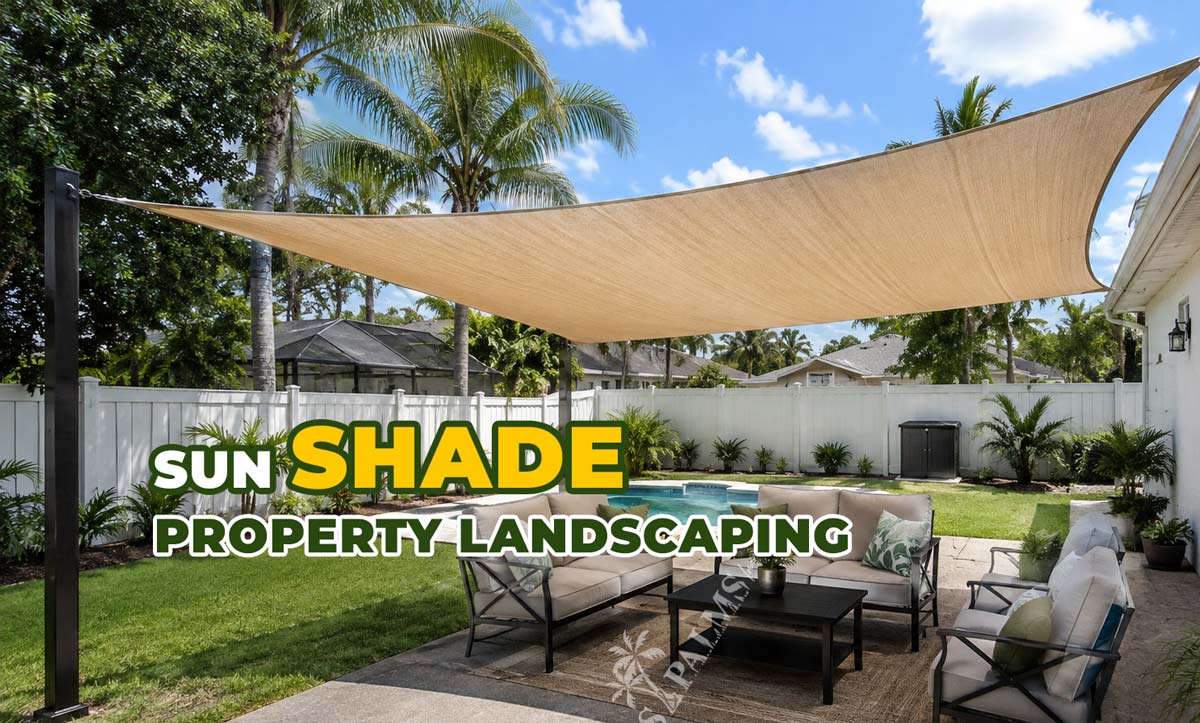
Fabric canopies stretched between anchor points, available in triangular, rectangular, or custom shapes. UV-resistant, weather-rated fabric can block a significant portion of direct sun while allowing airflow underneath — ideal for patios, pools, and play areas.
Pergolas
A semi-open structure that provides partial, dappled shade while still letting light through. Pergolas work well over dining and lounging areas, and can be paired with climbing vines for added natural coverage over time.
Arbors and Trellises
Smaller-scale structures best suited for walkways, garden entrances, or seating nooks. Combined with vining plants, they create living shade over a structural frame — a middle ground between trees and hardscape.
Solid-Roof Structures
Covered patios, gazebos, and screened enclosures offer the most complete and durable shade, though they carry a higher upfront cost. Best suited for yards where an outdoor space needs to function reliably in any weather, not just full sun.
Before installing any structural shade, track the sun’s path across your yard for a few days. The spot that feels hottest at noon often isn’t the spot that needs the most coverage — late-afternoon western sun is usually the harshest in Florida.
Shade-Tolerant Plants and Turf Alternatives
Once shade structures or mature trees are in place, plant selection underneath them needs to shift. Full-sun turf and flowering plants will thin out and struggle under a canopy, while shade-tolerant species will fill in and thrive in the same spot.
- Choose shade-tolerant St. Augustine varieties for turf under partial canopy
- Use groundcovers like liriope or asiatic jasmine in deep-shade zones where grass won’t hold
- Select shade-loving shrubs — azaleas, ferns, and hostas perform well under filtered light
- Mulch bare or thinning areas under dense canopy rather than fighting for turf coverage
- Group plants by light needs so irrigation and care stay consistent zone to zone
Our residential lawn care team can help identify which sections of turf are struggling due to shade versus other stressors, and recommend the right adjustments — whether that’s a shade-tolerant grass variety, a groundcover swap, or a mulched bed instead of fighting to keep grass alive where it was never going to thrive.
Maintaining a Shade Landscape Over Time
Shade landscapes aren’t “install and forget.” Trees need regular pruning to control canopy density and keep sightlines and structures clear — too little light reaching the ground can be just as much of a problem as too much sun. Overgrown canopy can also create the kind of humid, still conditions that encourage fungal issues in nearby turf and beds.
Our tree and palm trimming service keeps canopy shape and density in check, protecting both the shade benefit and the health of what’s growing underneath. Pairing that with an ongoing landscape maintenance program ensures shaded beds, groundcovers, and turf transitions get the seasonal attention they need as light patterns shift with tree growth.
A shade plan that isn’t maintained will drift out of balance — canopies thicken past what the yard below can handle, and areas that once supported turf end up bare. Periodic reassessment keeps the whole system working together.
Building a Layered Shade Plan
The most comfortable, lowest-maintenance Florida backyards typically combine more than one shade strategy rather than relying on a single fix. A mature tree canopy over the back half of the yard, a shade sail over the patio for immediate relief, and shade-tolerant plantings filling in underneath all work together — covering different timelines and different parts of the yard.
Whether you’re starting from scratch or reworking an existing yard, our full landscape services cover the tree work, plant selection, and ongoing care that a layered shade plan requires. The Lawns & Palms team has helped Florida homeowners design and maintain outdoor spaces that hold up to the state’s climate since 2005.
Frequently Asked Questions
How quickly can I get meaningful shade in my backyard?
Structural options like shade sails or pergolas provide shade immediately after installation. Trees take considerably longer — often several years to provide substantial canopy coverage — which is why most yards benefit from combining both approaches rather than waiting on trees alone.
Will grass grow under a shade tree or structure?
It depends on how much light still reaches the ground. Partial shade can support shade-tolerant turf varieties, but dense, full shade usually can’t sustain healthy grass long-term. In those spots, groundcovers or mulched beds are typically a better fit than fighting to keep turf alive.
Do shade structures need much maintenance in Florida?
Fabric shade sails should be inspected periodically for UV wear and tension, especially after storms. Pergolas and wood structures may need occasional treatment against humidity and rot. None of these require heavy upkeep, but Florida’s climate does mean they age faster than in drier regions.
What’s the best tree for fast shade in a Florida yard?
Red maple is one of the faster-growing options that still holds up well in Florida conditions. Live oak grows more slowly but produces a denser, longer-lasting canopy — worth the wait for yards planning decades ahead rather than a quick fix.
Ready to Cool Down Your Backyard?
Get a professional assessment of your yard’s sun exposure and a shade plan built for Florida’s climate.