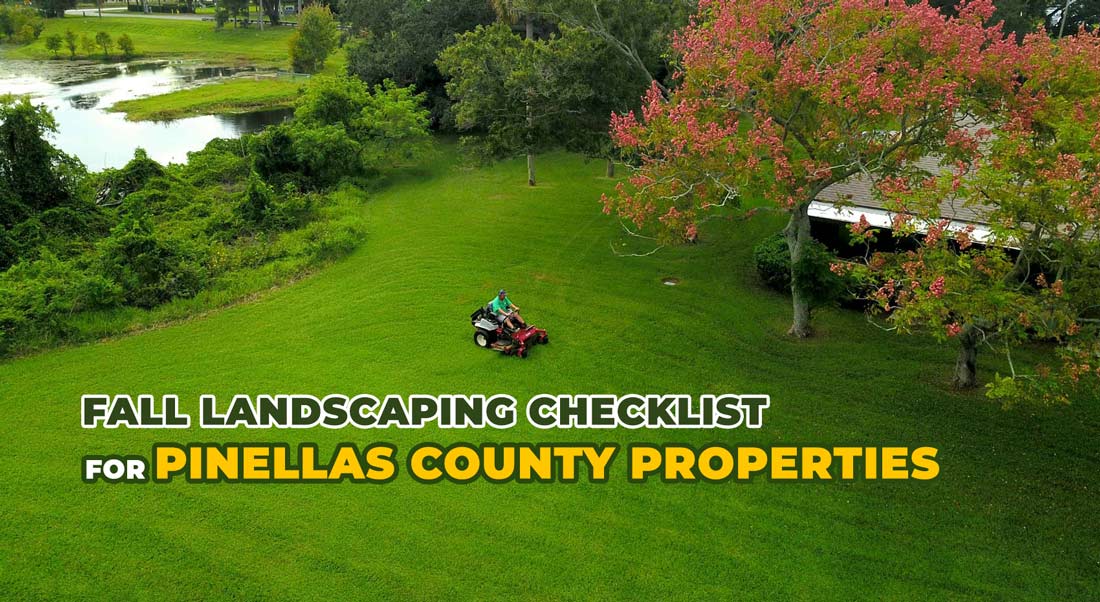
Fall Landscaping Checklist for Pinellas County Properties
Fall in Pinellas County doesn't look like fall anywhere else — there's no leaf-peeping, no frost warnings in October. But the season still marks a real shift for local landscapes: growth slows, rainfall tapers off from summer's peak, and the maintenance priorities that mattered in July aren't the same ones that matter now. Properties that adjust their approach heading into fall tend to look sharper through winter and bounce back faster next spring.
This checklist covers what actually needs attention on Pinellas County properties as summer transitions into fall — for both residential yards and commercial and HOA common areas.
It's easy to assume that without a true dormant season, Florida landscapes don't need a seasonal adjustment at all. In practice, the opposite is true — because the change is subtle, it's also easy to miss, and an irrigation schedule or fertilization plan that quietly stays on "summer settings" through fall tends to cause problems that don't show up until months later, when winter dormancy or spring green-up doesn't go as smoothly as it should.
Why Fall Maintenance Looks Different Here
Florida's fall transition is subtle compared to other regions, but it's not nothing. Rainfall drops off significantly after the peak of wet season, daytime temperatures moderate, and turf and plant growth rates slow down. That combination changes several maintenance decisions: mowing frequency can typically decrease, irrigation schedules often need adjusting to avoid overwatering as natural rainfall drops, and it's the ideal window for certain treatments that work best when grass isn't in aggressive active growth.
None of these shifts are dramatic on their own, which is exactly why they're easy to overlook. A property that simply keeps doing in October what it was doing in July won't look obviously wrong right away — but small inefficiencies compound. Overwatering a lawn that needs less water, fertilizing on a schedule tuned for peak summer growth, or letting hedges keep growing past their intended shape all quietly chip away at how a property performs through winter and how quickly it rebounds next spring.
Don't let your irrigation controller keep running a full summer schedule into fall. As natural rainfall decreases and temperatures moderate, an unadjusted summer schedule frequently overwaters turf right when it needs less — not more.
The Fall Checklist
The items below are ordered roughly by how quickly they need attention once summer starts winding down. Irrigation and fertilization timing carry the most consequence if delayed, while pruning, mulch, and the final storm inspection have a bit more flexibility in exactly when they happen, as long as they get done before winter dormancy sets in fully.
Adjust Irrigation for Lower Rainfall and Cooler Temps
Recalibrate run times and, if you have a smart controller, confirm it's actually adjusting automatically rather than assuming it is. This is the single highest-impact change most properties can make heading into fall.
Apply Fall Fertilization on the Right Schedule
Fall is a key fertilization window in Florida, but timing matters — apply too late and you risk pushing tender new growth right before a cold snap. Getting the nitrogen and potassium balance right for this transition supports root strength through winter rather than just top growth.
Address Summer Pest and Fungal Damage
Rainy season is peak season for chinch bugs, fungal disease, and armyworm activity. Fall is the time to assess what damage was done, treat any lingering issues, and start recovery on thinned or stressed turf before winter dormancy slows regrowth.
Prune and Shape Before Growth Slows Further
Get shrubs and hedges into their winter shape now, while there's still enough active growth left to recover cleanly from pruning. Waiting too long into the cooler months means cuts sit longer before new growth fills back in.
Refresh Mulch Ahead of the Dry Season
With rainfall tapering off, a fresh mulch layer applied now helps retain soil moisture through the drier months ahead — right when beds need it most and natural rainfall is doing less of the work.
Inspect for Lingering Storm Season Damage
As hurricane season winds down in November, do a final walkthrough for any storm-related damage that wasn't obvious immediately after a passing system — cracked limbs, leaning trees, or drainage issues that showed up under repeated heavy rain.
What Changes for Commercial Properties and HOAs
Residential Priorities
- Irrigation schedule adjustment
- Fall fertilization timing
- Bed and mulch refresh
- Pruning before growth slows
Commercial & HOA Priorities
- Coordinated irrigation audit across all zones and common areas
- Fall color and seasonal planting rotation for curb appeal
- Storm damage inspection across the full property
- Budget planning for winter and spring maintenance contracts
Property managers overseeing HOA common areas or commercial sites should treat fall as a planning checkpoint as much as a maintenance one. It's a natural point to review how the property performed through summer's heat and rain, and to set the maintenance and budget plan for the months ahead. Our commercial landscaping team typically builds this review directly into fall service visits rather than treating it as a separate conversation.
The properties that look sharpest by winter aren't the ones that got a single big fall cleanup — they're the ones where the fall transition was treated as a planning window, not just a to-do list.
Fall Also Sets Up Next Spring
What happens in fall directly affects how a lawn and landscape come out of winter. Turf that goes into the cooler months with strong root reserves from proper fall fertilization recovers faster and greens up sooner in spring than turf that was neglected through the transition. The same is true for irrigation habits — a system correctly dialed back in fall avoids months of unnecessary overwatering that can leave turf more vulnerable to disease going into the next growing season.
Beds and hedges pruned into shape during fall also hold their form better through winter's slower growth, meaning less corrective work is needed once spring's active growth returns. Properties that skip fall pruning often end up needing a more aggressive spring cutback just to get hedges back into a manageable shape — an avoidable extra step that a well-timed fall visit prevents.
- Irrigation controller schedule matches current rainfall and temperature, not summer defaults
- Fall fertilization has been applied on the correct timing window
- Turf has been assessed for lingering summer pest or fungal damage
- Beds have fresh mulch heading into the drier months
- Property has been walked for any unresolved storm-season damage
The Lawns & Palms team has managed the summer-to-fall transition for residential and commercial properties across Pinellas County since 2005. Our residential lawn care and commercial maintenance programs both build fall-specific adjustments directly into the seasonal schedule, so nothing gets missed between summer's peak growth and winter dormancy.
Fall Looks a Little Different Across the County
Properties closer to the coast in Clearwater and the barrier islands tend to hold onto warmth and humidity slightly longer into fall than more inland areas around Largo and Seminole, which can shift the ideal fertilization and pruning window by a couple of weeks depending on location. Shaded, tree-heavy properties also dry out more slowly than open, full-sun sites, which affects how quickly irrigation schedules should be scaled back.
Our Pinellas County landscape and lawn care crews adjust the fall transition plan property by property rather than applying one calendar date across every site, which is part of why a professional seasonal walkthrough tends to catch adjustments a generic checklist would miss.
Frequently Asked Questions
Do I need to change my mowing height in the fall?
As growth slows, mowing frequency can typically decrease, but mowing height for warm-season grasses like St. Augustine should generally stay consistent rather than being lowered heading into cooler months, since scalping stressed, slower-growing turf can set back recovery.
Is fall a good time to plant new landscaping?
Yes, for many species. Cooler temperatures reduce transplant stress compared to peak summer heat, and there's still enough of a growing window left before winter for new plantings to establish roots.
When should fall fertilization happen in Pinellas County?
Timing depends on grass type and current conditions, and applying too close to the first cool snap can push vulnerable new growth. A professional assessment can pinpoint the right window for your specific turf and property conditions.
Does hurricane season affect fall landscaping plans?
Yes — since hurricane season runs through November, fall maintenance often overlaps with continued storm risk. Tree and palm trimming completed earlier in the season should still be inspected for damage as storms pass through before finalizing other fall projects.
Get Your Property Ready for Fall
Schedule a seasonal transition assessment for your Pinellas County property today.