
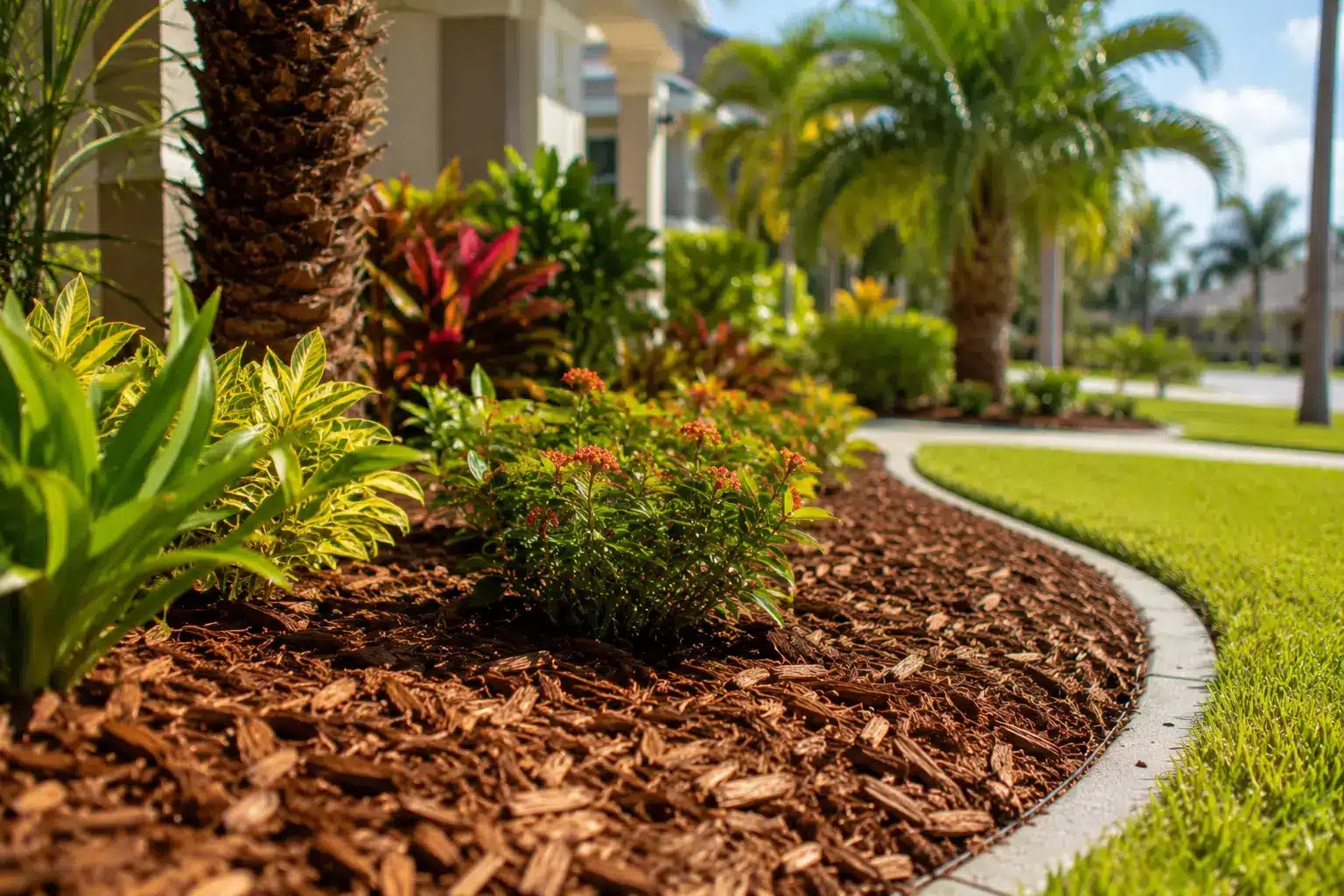
Mulch 101: What Actually Works for Florida Landscapes
Mulch looks simple — spread it, forget it, refresh it when it fades. But in Florida's heat, humidity, and heavy rainy-season downpours, the type, depth, and placement of mulch make a bigger difference than most homeowners expect. Get it right and beds hold moisture, suppress weeds, and protect roots through the hottest months. Get it wrong and mulch can actually smother plants, invite fungus, or wash away in the first big storm.
This guide covers what mulch genuinely does for a Florida landscape, the mistakes that undo its benefits, and how to choose and maintain it so beds actually perform better between visits — not just look freshly topped off.
The confusion usually starts because mulch is sold and marketed almost entirely on appearance — color, texture, bag size — with very little guidance on depth, placement, or how a given material actually performs under local rain and sun conditions. That gap between how mulch is purchased and how it actually needs to be applied is where most of the common mistakes below come from.
What Mulch Actually Does
It helps to think of mulch less as decoration and more as a soil-management tool that happens to also look good. Every function it performs — temperature moderation, moisture retention, weed suppression, gradual organic enrichment — directly supports the health of whatever is planted in that bed, whether that's a foundation shrub line, a specimen tree, or a mixed perennial border.
Mulch is often treated as a cosmetic finishing touch, but its real value is functional. A properly applied layer moderates soil temperature, slows evaporation so plants need less frequent watering, suppresses weed germination by blocking sunlight, and — as organic mulch breaks down — slowly adds organic matter back into the soil.
In Florida specifically, that moisture retention matters more than in most climates. Sandy soil drains fast, and intense sun bakes exposed soil surfaces quickly. A two-to-three-inch mulch layer can meaningfully reduce how often beds need supplemental watering, which matters even more given local watering restrictions that limit irrigation to specific days.
Common Mulch Mistakes That Waste Its Benefits
Volcano Mulching Around Trunks and Stems
Piling mulch up against a tree trunk or plant stem in a cone shape traps moisture against the bark, inviting rot, fungal disease, and pest activity. It's one of the most common mistakes homeowners and even some landscaping crews make, and it can slowly kill an otherwise healthy tree over several seasons.
Applying Too Deep
More isn't better. Mulch layers beyond three to four inches can suffocate roots, prevent water and oxygen from reaching the soil, and create the same rot conditions as volcano mulching — just spread across the whole bed instead of concentrated at the trunk.
Never Refreshing It
Organic mulch breaks down over time — that's part of its benefit — but a bed that's never topped off eventually loses its weed suppression and moisture retention entirely, while looking faded and thin. Florida's heat and rain accelerate breakdown faster than cooler, drier climates.
Choosing the Wrong Material for the Location
Not all mulch performs the same in every bed. Beds prone to washout during heavy rain need a heavier, coarser material that stays put, while decorative front-entrance beds can prioritize a finer, more uniform appearance.
Keep mulch pulled back two to three inches from any trunk or stem, creating a small ring of bare soil. It looks slightly less "filled in" than mulch pushed right up to the plant, but it's the difference between a bed that supports plant health and one that slowly damages it.
Choosing the Right Mulch Type
Better for High-Rain, Sloped, or Storm-Exposed Beds
- Pine bark nuggets or pine straw — heavier and slower to wash out
- Larger-particle hardwood mulch that interlocks and resists floating away
- Coarser textures generally outperform fine mulch during downpours
Better for Decorative, Low-Erosion Beds
- Fine-shredded hardwood or dyed mulch for a manicured, uniform look
- Cypress mulch, valued for appearance and natural pest resistance
- Best suited to flat, well-drained beds away from heavy runoff paths
There's no single "best" mulch for every Florida property — the right choice depends on the specific bed's exposure to rain runoff, slope, and how much visual uniformity the property owner wants. Mixing material types across a single property based on each bed's actual conditions, rather than buying one type in bulk for the whole site, generally produces better long-term results than a one-size-fits-all approach.
How Often Mulch Actually Needs Refreshing
Most Florida landscapes need mulch refreshed once or twice a year — commonly once heading into the dry season to maximize moisture retention, and again after the heaviest part of the rainy season has washed out or broken down the existing layer. Beds in full sun or high foot-traffic areas tend to need refreshing more often than shaded, low-traffic beds.
Refreshing mulch isn't just about appearance. A thinning layer stops suppressing weeds and stops moderating soil moisture well before it looks obviously bare — which means beds are often underperforming for weeks before anyone notices visually.
Timing the refresh around seasonal transitions rather than a fixed calendar date tends to work best. Applying fresh mulch right before the driest stretch of the year maximizes the moisture-retention benefit exactly when it matters most, while a second application after the peak of rainy season repairs whatever washed out or broke down during the heaviest storms. Refreshing on a rigid twice-a-year schedule regardless of actual conditions can mean missing the window when mulch would do the most good.
Mulch and Mowing Height Work Together
Mulch isn't just a bed-level decision — it interacts with the rest of a landscape's maintenance plan. Beds with well-maintained mulch reduce competition from weeds encroaching into adjacent turf, which makes mowing and edging cleaner and reduces how often herbicide treatment is needed along bed lines. This is part of why mulch maintenance is typically bundled into a broader landscape maintenance program rather than handled as a separate, standalone task.
For properties managing multiple bed types — foundation plantings, tree rings, decorative entrance beds — a single maintenance visit that addresses mulch depth, edging, and plant health together tends to hold up far better between visits than mulch refreshed in isolation without attention to the rest of the bed.
- Mulch depth measures less than an inch in places
- Color has faded significantly since the last refresh
- Weeds are visibly pushing through the existing layer
- Mulch has washed out of sloped or low-lying areas
- It's been more than six months since the last application
The Lawns & Palms team has maintained beds across Florida's Gulf Coast climate since 2005, matching mulch type, depth, and refresh schedule to how each property actually holds up through the region's heat, rain, and humidity. Our landscape services build mulch maintenance into the same visit as pruning and bed care, so nothing gets addressed in isolation.
Why Gulf Coast Conditions Change the Calculus
Mulch advice written for cooler, drier regions of the country often doesn't hold up along Florida's Gulf Coast. Intense sun accelerates organic breakdown, heavy rainy-season downpours can wash lighter mulch right out of sloped beds within a single storm, and year-round warmth means fungal and pest pressure never really goes dormant the way it does farther north. A mulch strategy that works in Ohio or Pennsylvania can fail here within a single season.
That's part of why our Pinellas County landscape crews select mulch type and depth based on each bed's actual sun exposure, slope, and drainage pattern, rather than applying one blanket approach across an entire property. A shaded, sheltered foundation bed and an exposed, sloped entrance bed on the same property often call for different mulch decisions entirely.
Frequently Asked Questions
Is dyed mulch safe for plants?
Most dyed mulches use plant-safe, iron-oxide-based dyes and are not harmful to plants. The bigger consideration is usually sourcing — mulch made from recycled or treated wood can sometimes carry contaminants, so buying from a reputable supplier matters more than the dye itself.
Should I remove old mulch before adding new mulch?
Not usually, unless the existing layer has become compacted, matted, or is harboring fungal growth. In most cases, a fresh layer can be added on top of a thinned existing layer, as long as the combined depth doesn't exceed three to four inches.
Can too much mulch actually kill a plant?
Yes. Mulch piled too deep or against a trunk can trap moisture, promote rot and fungal disease, and suffocate roots by blocking oxygen exchange with the soil. This is one of the more common — and preventable — causes of declining plant health in over-mulched beds.
Does mulch attract termites or other pests?
Wood mulch can provide habitat for some insects, but properly maintained mulch kept clear of a home's foundation is generally low-risk. Keeping mulch beds a few inches away from structural wood and foundations is the simplest way to minimize any pest concern.
Get Your Beds Properly Mulched and Maintained
Let our team handle mulch depth, placement, and refresh scheduling as part of a complete landscape maintenance plan.


