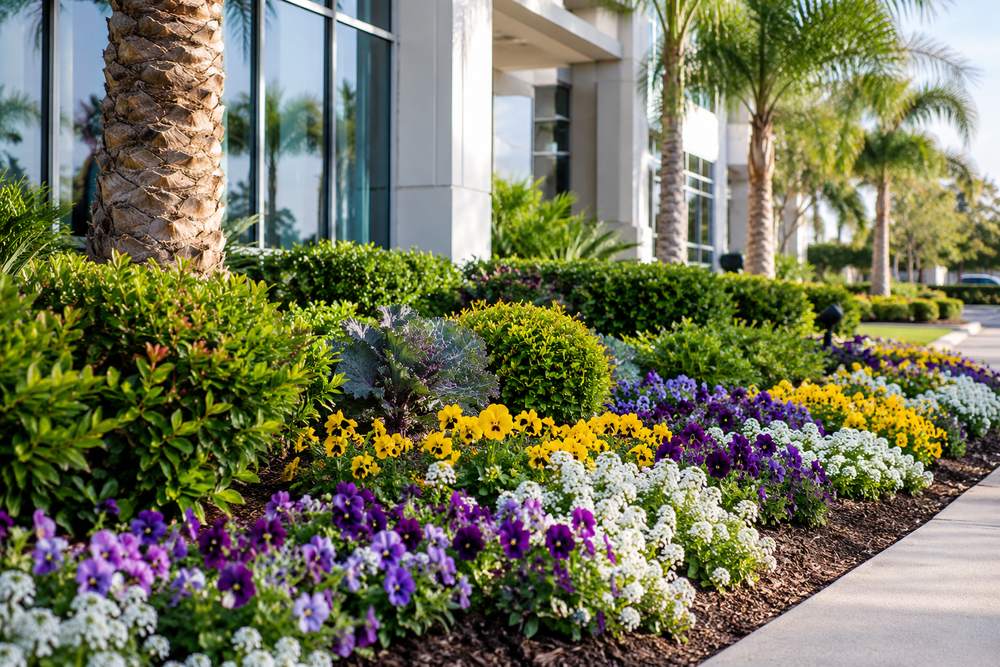
Seasonal Color for Commercial Properties in Pinellas County: Planning Your Cool-Season Annuals
For commercial properties in Pinellas County, the cool season is the best time of year to make an entrance look its best. Lower temperatures, less rain, and fewer pest problems give annual flowers a long, reliable run from late fall into spring — right when seasonal residents return, leasing activity picks up, and customers are spending more time outdoors. A well-planned seasonal color rotation is one of the most visible upgrades a property manager can make for the money.
But seasonal color only pays off when it's planned around the right plants, the right beds, and the right timing. Here's how to get the most out of a cool-season annual installation on a commercial property.
Why Seasonal Color Matters for Commercial Properties
The entrance bed, monument sign, and front walkway are the first things tenants, residents, and customers see. Bright, healthy color signals that a property is cared for and well managed. Faded, leggy, or bare beds send the opposite message — even if the rest of the grounds are in good shape.
For condo associations and apartment communities, seasonal color also affects resident satisfaction and leasing. For retail, medical, and office properties, it shapes first impressions before anyone walks through the door. And because annuals are concentrated in a few high-visibility areas, a modest investment creates a big visual impact.
Best Cool-Season Annuals for Pinellas County
Not every annual sold at garden centers in fall holds up in our climate. These are reliable performers for commercial beds from late fall through early spring:
Petunias
Heavy bloomers in nearly every color, petunias are a commercial favorite for full-sun entrance beds. Newer spreading varieties fill space quickly and handle mild winter conditions well.
Dianthus
Compact, tough, and cold-tolerant, dianthus offers pink, red, and white blooms with a neat, uniform look that works well along walkways and sign beds.
Snapdragons
Snapdragons add height and vertical interest behind lower bedding plants. They perform best in the cooler months and make an entrance feel layered and designed.
Begonias and Impatiens
For shaded entrances, courtyards, and beds under tree canopies, begonias and impatiens provide steady color where sun-loving annuals would struggle.
Geraniums and Sweet Alyssum
Geraniums add bold, saturated color for sunny focal points, while sweet alyssum works as a low, fragrant border that softens bed edges.
Choose two or three colors that complement your building, signage, or brand rather than mixing every color available. A limited, repeated palette looks intentional and professional from the street — a mixed rainbow tends to look busy.
Where to Put Seasonal Color
Seasonal color is most effective when concentrated where people actually look. Spreading annuals thinly across the whole property dilutes the impact and raises maintenance costs. Focus on:
- Monument signs and main entrance beds
- Front walkways and building entries
- Leasing office or clubhouse entrances
- Pool decks and common gathering areas
- Large containers and planters near doorways
Planning the Installation
Prepare the Beds
Remove spent summer annuals, weeds, and old roots. Loosen the soil and work in fresh planting mix, since sandy Pinellas County soil holds little moisture or nutrients on its own. Proper bed prep is the difference between annuals that fill in and annuals that stall.
Check Irrigation Coverage
Annual beds need consistent moisture, especially in the first few weeks. Make sure spray heads or drip lines cover the full bed without overspraying sidewalks or walls. Cooler weather means less frequent watering, so adjust schedules as plants establish.
Plant at the Right Density
Commercial beds typically look best planted densely enough to read as solid color within a few weeks. Sparse plantings leave visible soil and invite weeds. A professional crew will calculate plant counts based on bed size and variety.
Finish With Mulch and Edging
A light layer of mulch around the new plants holds moisture and keeps the bed looking clean. Crisp edges along turf and hardscape frame the color and make the whole installation look sharper.
Common Seasonal Color Mistakes
- Planting too early while summer heat lingers
- Skipping soil prep in old beds
- Too many colors and varieties at once
- Sun-loving annuals planted in shade
- No plan for deadheading or replacement
What Works Better
- Installing once temperatures settle in fall
- Fresh planting mix worked into each bed
- A simple, repeated color palette
- Plants matched to each bed's light
- Ongoing care built into maintenance visits
Keeping Color Looking Fresh All Season
Installation is only half the job. Annuals need regular attention to stay full and blooming for months. That means deadheading spent flowers, pulling weeds before they compete, monitoring for pests and disease, and replacing any plants that decline. A cold snap may also call for quick protective measures or replacement of damaged plants.
The most reliable approach is to build seasonal color care into regular grounds visits. Our landscape maintenance program includes bed care during scheduled visits, so annuals get consistent attention instead of being forgotten after installation day.
The goal isn't flowers for a week after installation — it's an entrance that looks freshly planted every time a tenant, resident, or customer drives in for the entire season.
Building a Year-Round Rotation
Many commercial properties rotate seasonal color two or three times a year: a cool-season planting in fall, a transition in spring, and heat-tolerant annuals or perennials for summer. Planning the rotation in advance keeps beds from sitting empty between changeovers and helps property managers budget accurately for the year.
Some properties reduce rotation costs by anchoring beds with low-maintenance perennials and shrubs, then using annuals only in the most visible pockets. Our commercial landscape services help property managers design a mix that balances visual impact with long-term maintenance costs.
Why Pinellas County's Cool Season Is Prime Time for Color
In much of the country, fall means beds winding down for the year. In Pinellas County, it's the opposite. Once the summer rainy season ends, temperatures become comfortable, humidity eases, and annual flowers face far less stress from heat, fungus, and heavy downpours. Plants installed in late fall often look better in January than anything planted in July could manage.
The timing also lines up with the busiest stretch of the year for many local properties. Seasonal residents return to condos and communities across Clearwater, Largo, and Seminole. Tourism picks up along the beaches, and retail centers see more foot traffic heading into the holidays. Entrances that look fresh and colorful during these months make a strong impression on exactly the people property managers most want to impress.
Coastal properties do need a few extra considerations. Salt spray and steady breezes near the Gulf and Intracoastal can stress tender annuals, so beds with direct coastal exposure benefit from tougher varieties and slightly more frequent checks. Wind can also dry out containers and raised planters faster than ground beds, which means watering needs may differ across the same property.
Planning ahead matters here too. Popular varieties and colors can sell out at local growers once the season starts, so properties that finalize their color plan early in fall usually get better plant selection and a smoother installation schedule. Booking the work alongside a fall mulch refresh also keeps beds looking finished all at once rather than in stages.
From condo entrances in Clearwater to retail centers in Largo, Seminole, and Pinellas Park, the Lawns & Palms team has been installing and maintaining seasonal color for Pinellas County commercial properties since 2005.
FAQs
When should we plant cool-season annuals in Pinellas County?
Late October through November is typically ideal, once daytime highs consistently drop and the summer heat breaks. Planting too early can stress cool-season varieties.
How long will cool-season annuals last?
With proper care, most cool-season annuals look good from late fall into spring, often four to six months. Display life depends on variety, weather, and how consistently beds are maintained.
Are annuals worth the cost for a commercial property?
When concentrated in high-visibility areas like entrances and signage, annuals provide strong visual impact for a relatively small portion of the overall landscape budget.
What happens if we get a cold snap?
Most cool-season annuals handle typical Pinellas County winter lows well. During an unusual freeze, some plants may need protection or replacement afterward.
Can seasonal color be added to an existing maintenance contract?
Yes. Many properties add seasonal color as a scheduled rotation within their maintenance agreement, which keeps installation and ongoing care under one plan.
Ready to Brighten Your Entrance?
Get a seasonal color plan built for your Pinellas County property — installed and maintained by one trusted team.